Every general contractor in the Denver metro eventually asks some version of this question, usually about two days before an inspector walks the site. The short answer is that a fuel tank on a job site is regulated by three different authorities at once, and they do not agree with each other about what diesel even is.
Here is the framework, the actual numbers, and the one detail that catches the most people.
Is diesel a flammable liquid or a combustible liquid?
Both — depending on who is asking. This is not a technicality. It changes which rules apply to your site.
Under the fire code, classification runs on flash point. Diesel typically flashes between 125°F and 180°F, which puts most #2 diesel in Class II or Class IIIA combustible liquid territory. Combustible liquids get more generous thresholds than gasoline, which is a Class I flammable liquid and triggers a permit at just 5 gallons.
OSHA's construction standard draws the line somewhere else. 29 CFR 1926.155(h) defines a flammable liquid as anything with a flash point below 140°F. In a 1994 interpretation letter, OSHA stated plainly that diesel fuel is considered a flammable liquid under the construction standards and must be kept in safety cans — while kerosene, at a 150°F flash point, is not.
So the same drum of diesel is a combustible liquid to the fire marshal and a flammable liquid to the OSHA compliance officer. You have to satisfy both.
| Authority | How it classifies diesel | What that controls |
|---|---|---|
| Fire code (IFC, as adopted locally) | Class II / IIIA combustible liquid | Permits, setbacks, site plan review |
| OSHA construction (1926.155(h)) | Flammable liquid (flash point under 140°F) | Containers, piles, extinguishers, dispensing |
| EPA (40 CFR 112) | Oil | Spill planning and containment above 1,320 gal |
What size diesel tank needs a permit in the Denver metro?
There is no single metro-wide number, because every fire authority adopts and amends the International Fire Code on its own. Denver Fire, Aurora Fire Rescue, South Metro, West Metro, North Metro, and the Adams County districts each run their own permit desk.
That said, the IFC baseline most of them start from is consistent: an operational permit is required for storage or use of more than 5 gallons of a Class I flammable liquid, or more than 60 gallons of a Class II or Class IIIA combustible liquid. North Metro Fire Rescue publishes exactly those thresholds for temporary above-ground fuel tanks at construction sites.
In practice: a 55-gallon drum usually stays under the line. A 250-gallon cube, a 500-gallon skid tank, or a 1,000-gallon portable does not.
| Diesel on site | What it typically triggers |
|---|---|
| Under 60 gallons, outdoors | Usually no fire permit. OSHA container rules still apply. |
| Over 60 gallons, outdoors | Operational permit from the local fire authority in most metro jurisdictions. |
| Any single container over 60 gallons | Treated as a portable tank — a different OSHA subsection applies. |
| 1,100 gallons in one pile or area | OSHA ceiling for container storage in a single group. |
| 1,320 gallons aggregate aboveground | EPA SPCC plan required under 40 CFR 112. |
North Metro's published requirements also give a useful picture of what the permit actually asks for: tanks kept at least 50 feet from any building or combustible storage, drainage or diking to contain a spill, product labeling plus a "Flammable — Keep Fire and Flame Away" placard, NO SMOKING signage around the dispensing area, and a 2A-20-B:C extinguisher within 75 feet of the tank. The application itself is a site plan showing storage method, quantities, distances to buildings and property lines, access ways, and spill control.
What does OSHA require for diesel storage on a job site?
OSHA's rules apply whether or not you pulled a fire permit. These are the numbers that show up in citations.
| Requirement | Limit | Standard |
|---|---|---|
| Maximum container size (to count as a "container") | 60 gallons | 1926.152(c)(1) |
| Maximum per pile or storage area | 1,100 gallons | 1926.152(c)(1) |
| Clearance between piles or groups | 5 feet | 1926.152(c)(1) |
| Distance from any building | 20 feet | 1926.152(c)(1) |
| Indoor storage outside an approved cabinet | 25 gallons | 1926.152(b)(1) |
| Fire extinguisher distance from storage area | 25 to 75 feet | 1926.152(d)(2) |
| Collision protection where vehicles operate | Curb or barrier | 1926.152(e)(4) |
The 1,000-gallon tank exception people miss
A 2000 OSHA interpretation letter addressed a 1,000-gallon diesel tank on a construction site directly. The finding surprises people: OSHA does not require dikes or barricades around it, because the diking language in 1926.152(c)(1) applies to containers of 60 gallons or less. A 1,000-gallon portable tank falls under the outdoor portable tank provisions instead — 1926.152(c)(4), (c)(5), and (c)(7) — covering location, separation between tanks, fire apparatus access, and emergency venting.
Do not read that as "containment is optional." Your fire authority will very likely require it under the fire code, and Colorado water-quality rules and your own stormwater permit almost certainly do. OSHA simply is not the agency mandating it at that size.
When does the EPA get involved?
At 1,320 gallons of aggregate aboveground oil storage capacity, the EPA's Spill Prevention, Control, and Countermeasure rule (40 CFR 112) applies. Two details catch contractors:
- It counts capacity, not contents. Three 500-gallon tanks sitting empty still total 1,500 gallons of capacity. You are over.
- It aggregates across the site. Tanks and drums 55 gallons and larger count toward the total. Fuel tanks on the equipment itself do not — EPA excludes “motive power containers” that exist to move the machine.
Cross that line and you need a written SPCC plan, secondary containment sized for the largest container plus precipitation, inspection records, and trained personnel. For a job site that will be open eight months, that is real administrative weight.
What does the inspector actually look at?
From what we see walking sites across the metro, the recurring findings are boring and preventable:
- Tank too close to the trailer, the material laydown, or the property line.
- Extinguisher missing, expired, or the wrong rating.
- No secondary containment, or containment full of rainwater and therefore useless.
- Missing product labeling and NO SMOKING signage.
- No collision protection where a loader swings past the tank forty times a day.
- Permit pulled for the original tank, then a second tank added and never disclosed.
The last one is the expensive one. Permits are issued against a specific site plan. Adding capacity changes the plan.
Can you skip the tank and the permit entirely?
On a lot of Denver-metro sites, yes — and it is worth running the math before you order a tank.
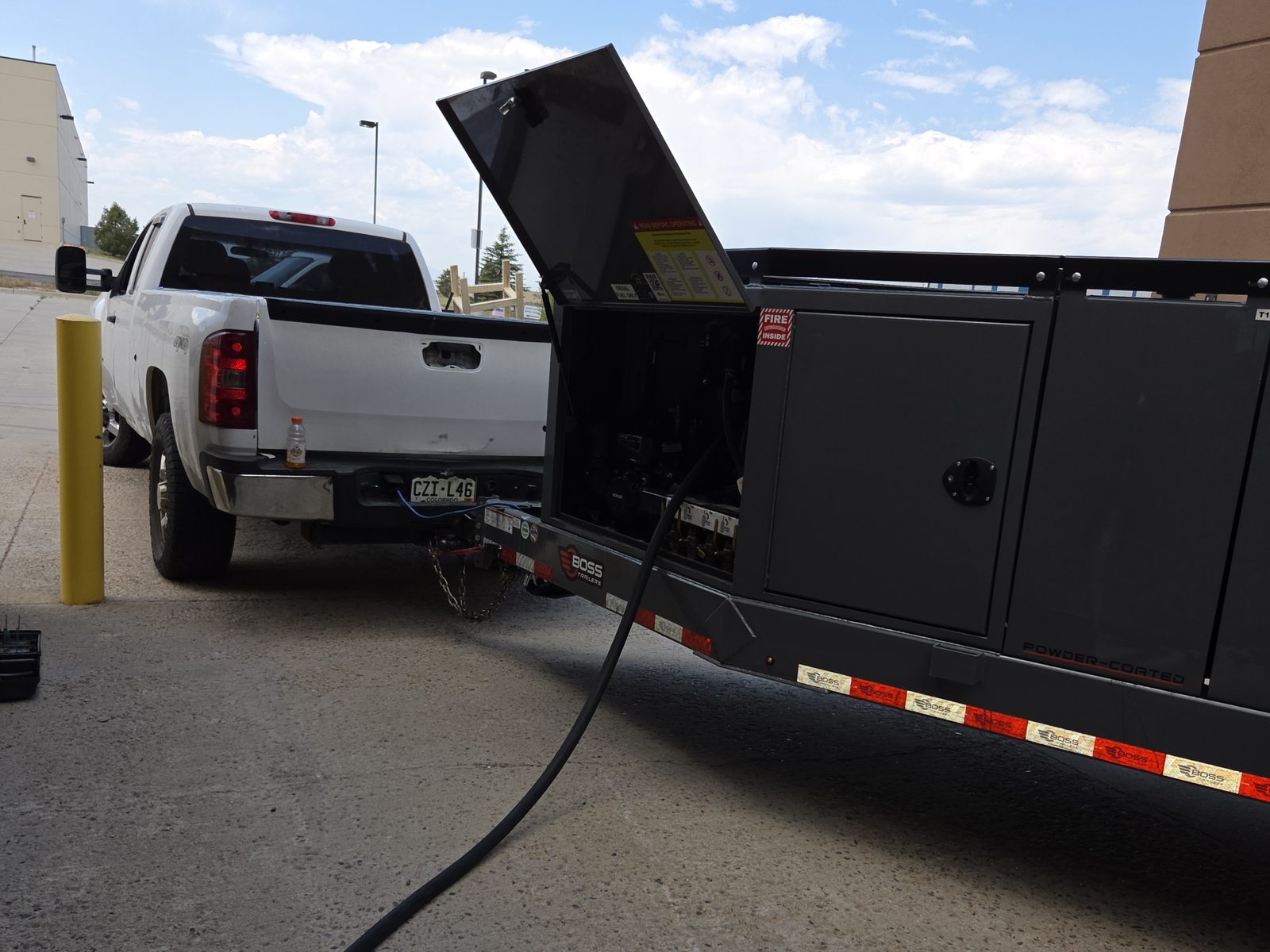
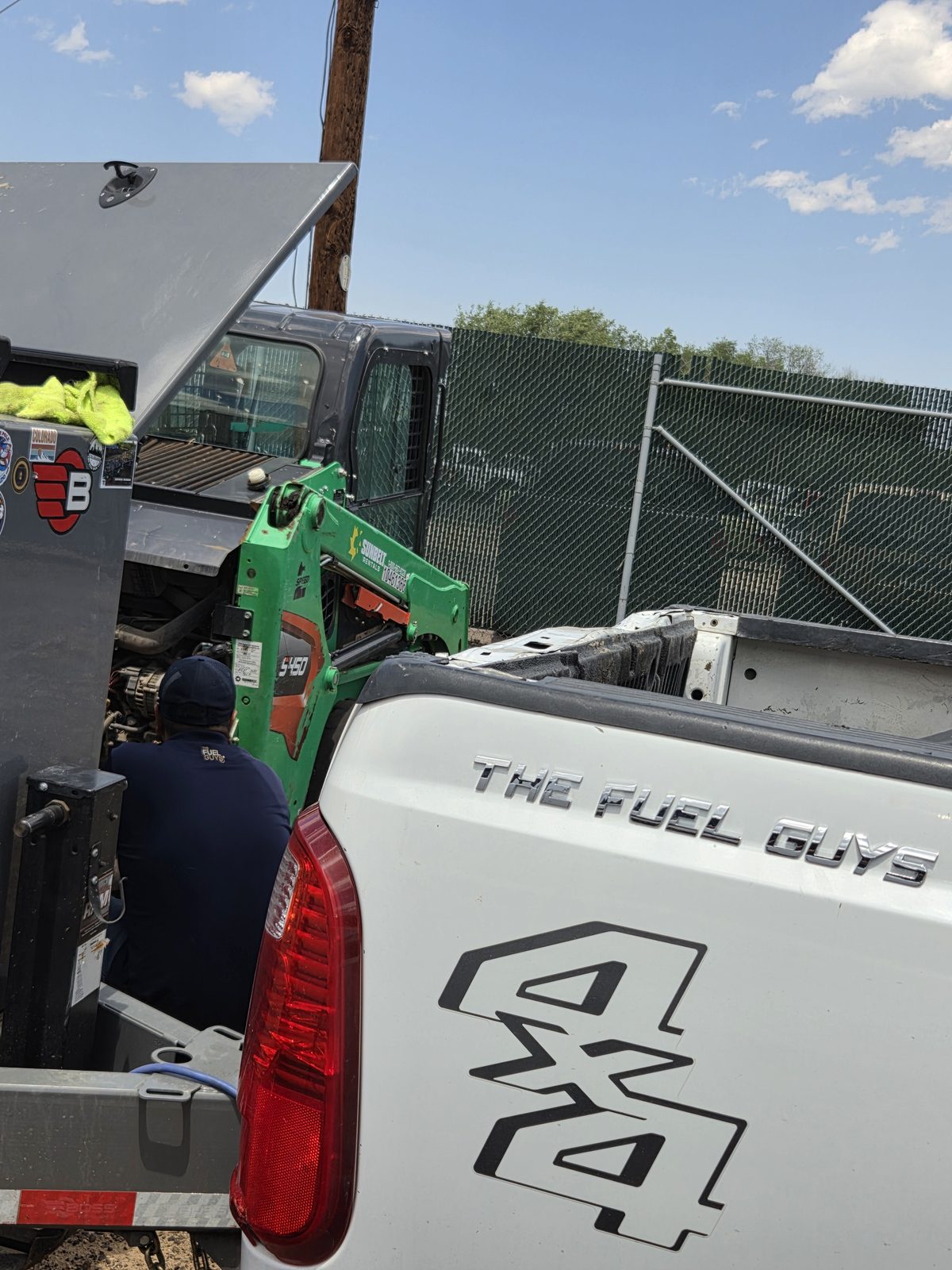
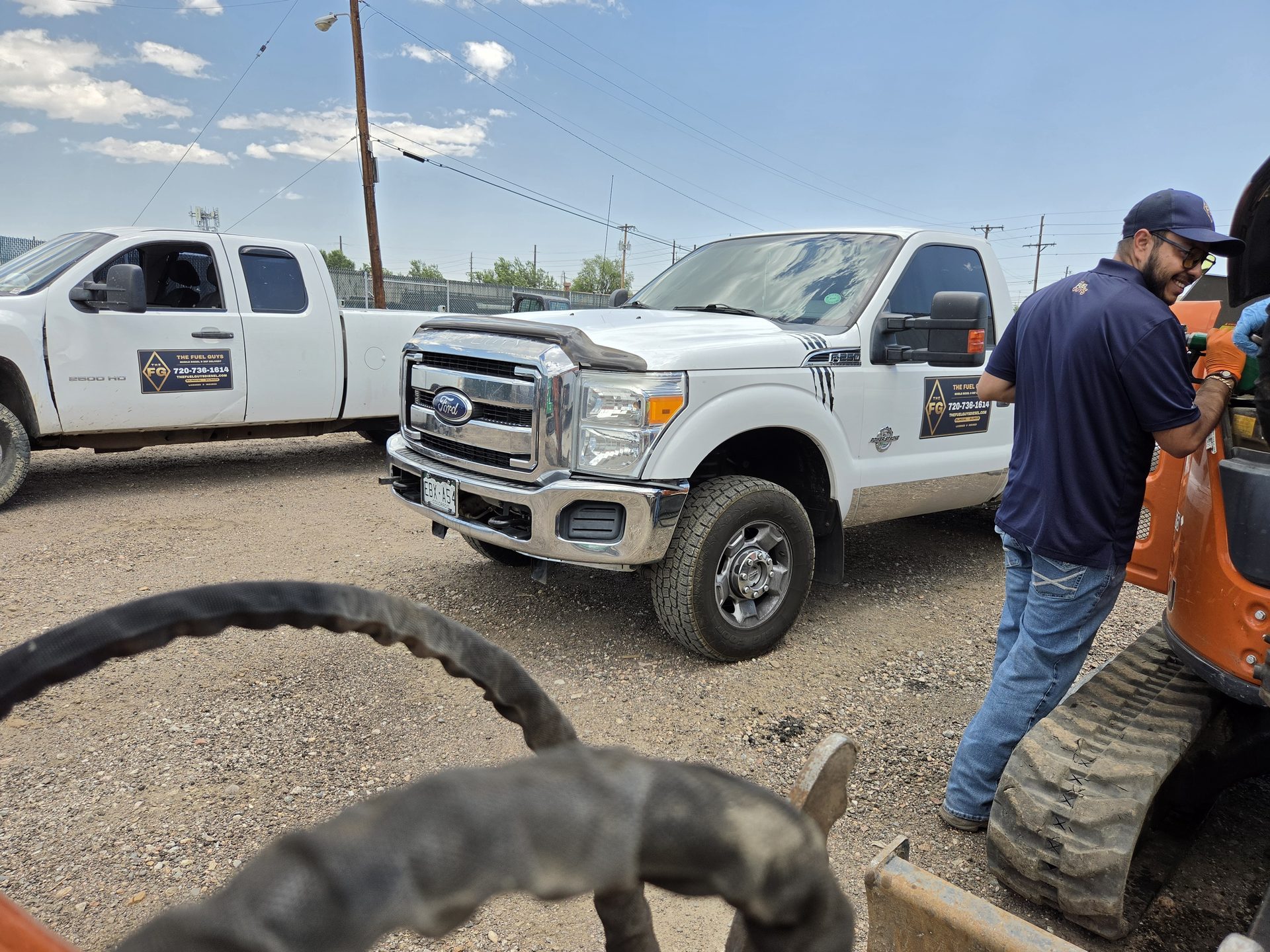
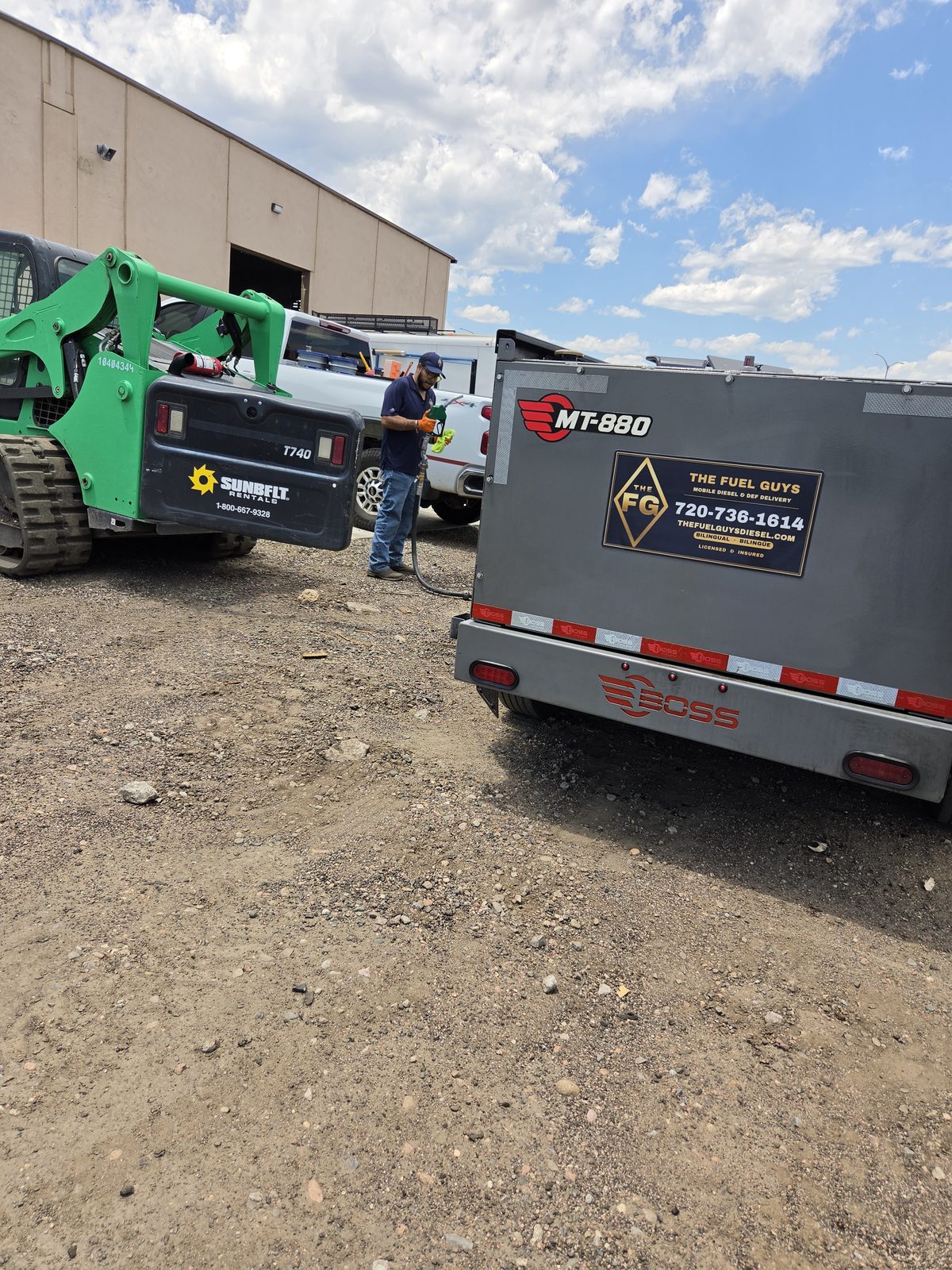
If fuel is delivered directly into your equipment on a set schedule, there is no bulk storage container on site to permit, contain, sign, inspect, or defend. No SPCC threshold to track. No tank sitting unattended over a long weekend advertising several thousand dollars of free diesel to anyone with a siphon.
The trade-off is real and you should weigh it honestly. On-site storage means fuel is there at 4:00 a.m. whether anyone answers the phone or not, and per-gallon cost is usually lower at volume. Wet hosing means you depend on a supplier showing up. That is exactly why delivery reliability matters more than the per-gallon number — a $0.06 saving is irrelevant on the morning a crew of twelve stands around a dry excavator.
The sites where storage still wins: very high burn rates, remote locations, or operations that fuel at unpredictable hours. The sites where delivery wins: most everything else in the metro, especially tight urban infill where a 50-foot setback from any building is close to impossible to achieve anyway.
One caveat worth stating plainly
Thresholds, amendments, and permit fees differ across Denver Fire, Aurora, South Metro, West Metro, North Metro, and the Adams and Arapahoe County districts. This article is a framework, not a substitute for a phone call to the authority having jurisdiction over your specific address. Make that call before the tank arrives, not after.