What do the manufacturers actually publish?
Caterpillar publishes fuel consumption for every excavator it sells. The numbers below are not lab estimates — Cat pulls them from VisionLink telematics on machines in the field, then sorts them into three columns by how much of the hour the engine spends at idle: 50% idle for the low figure, 30% for medium, 10% for high.
That definition matters more than the gallons. When two contractors argue about what a 320 burns, they are usually both right and describing different job sites.
| Cat model | Low (50% idle) | Medium (30% idle) | High (10% idle) |
|---|---|---|---|
| 313 | 1.64 gal/hr | 2.11 gal/hr | 2.57 gal/hr |
| 315 | 1.72 gal/hr | 2.21 gal/hr | 2.70 gal/hr |
| 320 | 2.42 gal/hr | 3.07 gal/hr | 3.72 gal/hr |
| 323 | 2.71 gal/hr | 3.45 gal/hr | 4.18 gal/hr |
| 330 | 3.69 gal/hr | 4.73 gal/hr | 5.77 gal/hr |
| 336 | 4.86 gal/hr | 6.30 gal/hr | 7.75 gal/hr |
| 349 | 6.43 gal/hr | 8.32 gal/hr | 10.20 gal/hr |
| 395 | 9.60 gal/hr | 12.45 gal/hr | 15.30 gal/hr |
Cat model numbers approximate metric tonnage, but only roughly: the 320 weighs 22,000 kg (48,500 lb) and the 336 weighs 37,200 kg (81,900 lb). Treat the number as a size class, not a spec.
Why does the same excavator burn 50% more fuel on one job than another?
Look at the 320 row again. Low to high is 2.42 to 3.72 gallons an hour — a 54% swing on the same machine. Three things move it.
Idle time
This is the biggest lever, and it is the one nobody tracks. Komatsu pulled twelve months of telematics from roughly 75,000 machines in North America and found average idle time of 38%. Volvo puts large-fleet averages at 28 to 30%. Komatsu says customers who actively manage idling land around 20%.
One manufacturer's own figures put the cost plainly: an excavator running about 1,000 hours a year, idling 40% of that time and burning roughly a gallon an hour at idle, wastes around 400 gallons annually. At recent Rocky Mountain diesel prices that is close to $1,900 per machine, per year, for work nobody did.
What the machine is doing
Trenching in Front Range clay pulls harder than loading trucks, which pulls harder than fine grading. A hydraulic breaker keeps the pump near relief pressure for the whole cycle. None of that shows up in a spec sheet, and all of it shows up on your fuel invoice.
How old the iron is
Newer machines genuinely do better. Caterpillar states the current 330 burns up to 20% less fuel per unit of work than the 330F it replaced, and as much as 15% less than the 330D2. If half your fleet is rented and half is fifteen years old, expect the numbers to spread.
How do you estimate burn on a machine that isn't a Cat?
Use horsepower. The Cat 320 makes 157 net horsepower and burns 3.07 gal/hr at medium load — 1.96 gallons per hour per 100 net horsepower. The 336 makes 311 net horsepower and burns 6.30 gal/hr, which works out to 2.03. Two machines, double the size, same ratio.
So: roughly 2 gallons per hour for every 100 net horsepower, at a normal 30%-idle duty cycle. A 210-horsepower machine of any brand lands around 4.2 gal/hr. That gets you close enough to size a tank or a delivery.
It is a starting estimate, not a spec. Check it against your own fuel tickets and hour meters after a week, then use your number. Most excavators built in the last decade also show an average fuel rate on the in-cab display — better data than any table, including this one.
What does that cost per hour in Denver?
The math below uses $4.80 per gallon, close to the U.S. Energy Information Administration's Rocky Mountain on-highway retail average of $4.795 for the week ending June 22, 2026. Diesel moves daily, so treat this as a ratio exercise, not a quote.
| Cat model | Medium load | Fuel cost / hr | Per 9-hour day |
|---|---|---|---|
| 313 | 2.11 gal/hr | $10.13 | $91 |
| 320 | 3.07 gal/hr | $14.74 | $133 |
| 330 | 4.73 gal/hr | $22.70 | $204 |
| 336 | 6.30 gal/hr | $30.24 | $272 |
| 349 | 8.32 gal/hr | $39.94 | $359 |
Two things pull your real number below that table. Off-road equipment can legally run dyed diesel, which is not subject to highway fuel taxes and so lands cheaper per gallon than anything at the pump. And volume delivered to the site prices better than a fuel truck making a hundred-gallon stop.
How much DEF does an excavator use?
Caterpillar puts DEF consumption at approximately 2 to 3% of diesel consumption by volume:
| Cat model | Diesel, medium load | DEF per hour | DEF per 9-hour day |
|---|---|---|---|
| 320 | 3.07 gal/hr | 0.06 – 0.09 gal | 0.55 – 0.83 gal |
| 330 | 4.73 gal/hr | 0.09 – 0.14 gal | 0.85 – 1.28 gal |
| 336 | 6.30 gal/hr | 0.13 – 0.19 gal | 1.13 – 1.70 gal |
| 349 | 8.32 gal/hr | 0.17 – 0.25 gal | 1.50 – 2.25 gal |
Here is the trap. A Cat 336 carries a 158.5-gallon fuel tank and a 21.1-gallon DEF tank. At medium load the fuel runs dry in about 25 hours; the DEF lasts somewhere between 110 and 165 hours. So the DEF tank spans four to six diesel fills — long enough that everyone forgets it exists, right up until the machine derates mid-shift.
Storage is the other half. Cat lists ideal DEF storage between 15°F and 77°F, with a one-year shelf life below 86°F stretching to eighteen months below 77°F. A jug sitting in a steel job box through a Denver August is not inside that window. Buy DEF on the same cycle as fuel and store it in the shade.
Does Denver's altitude change the numbers?
Not at 5,280 feet. Cat's own spec sheets for the 320 and 336 recommend the machines up to 4,500 m (14,760 ft), with engine power derate starting above 3,000 m (9,840 ft). Denver, Aurora, Commerce City, Brighton — every metro job site sits well under that line, and the published burn rates apply as written.
High-country work is a different conversation. Above roughly 9,800 feet you begin losing engine power, and a machine with less power usually needs more hours to move the same dirt. Gallons per hour may hold; gallons per cubic yard will not. Budget both fuel and schedule accordingly on mountain jobs.
How do you turn gallons per hour into a fuel plan?
Multiply, then add a margin. Two 320s and one 336 running 9-hour days at medium load is (2 × 3.07) + 6.30 = 12.44 gal/hr, or about 112 gallons a day — roughly 560 gallons across a five-day week, before pickups, light towers, or a compactor.
That number decides your approach. Around 500 gallons a week, an on-site tank refilled once a week is straightforward. Below that, wet hosing — a fuel truck topping off each machine directly — usually costs less than tank rental plus spill containment. Above it, you are into scheduled bulk deliveries.
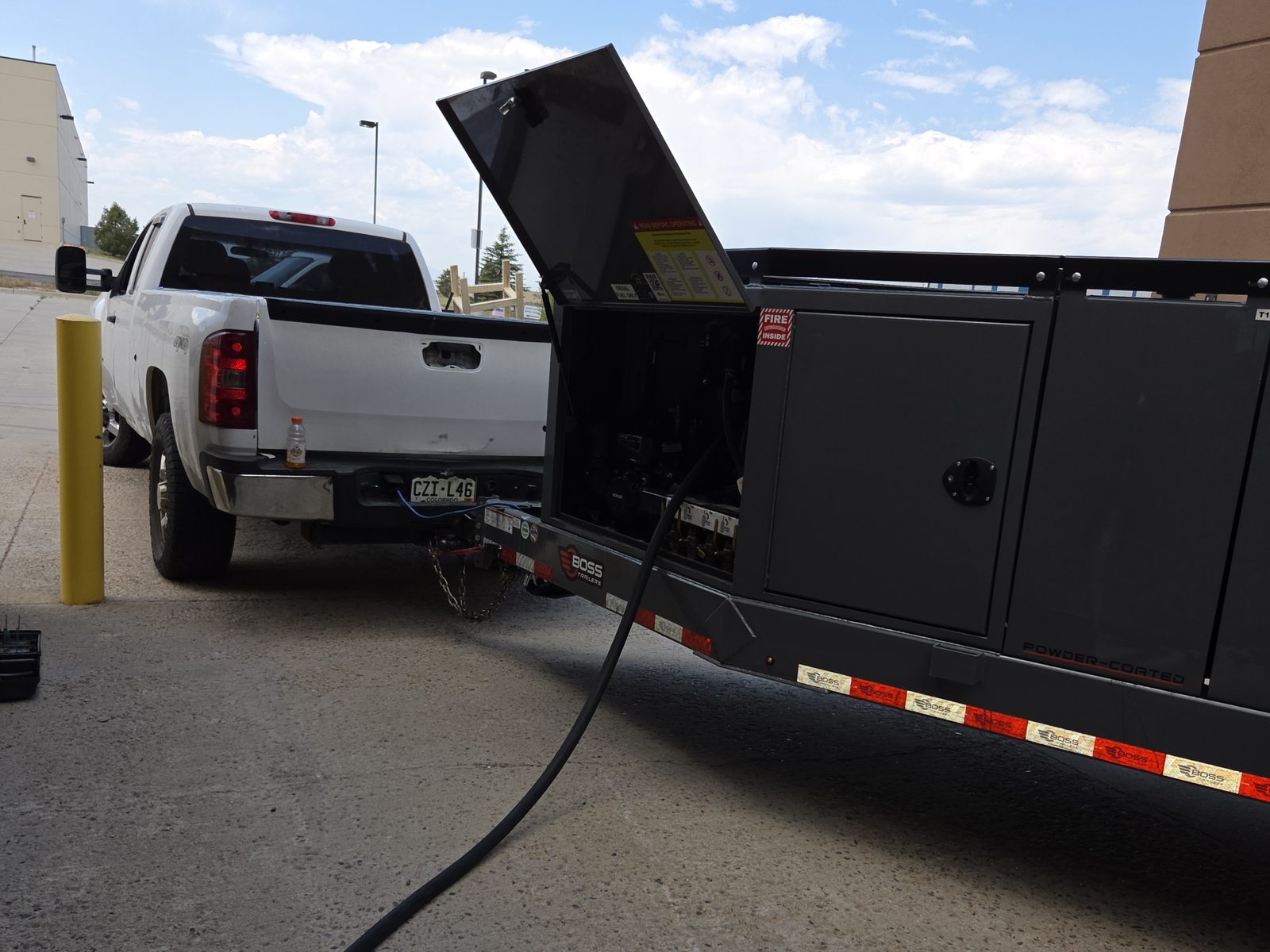
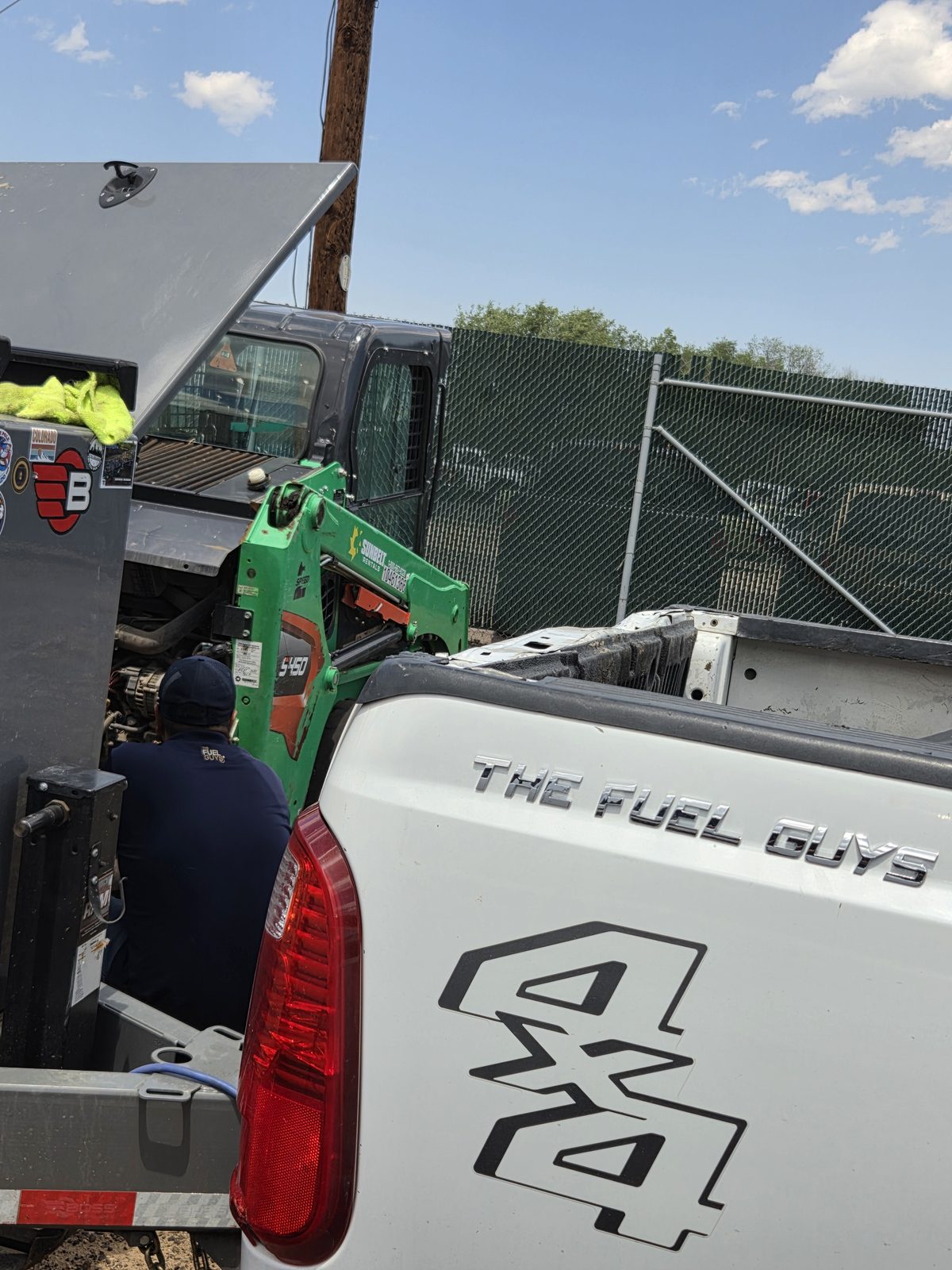
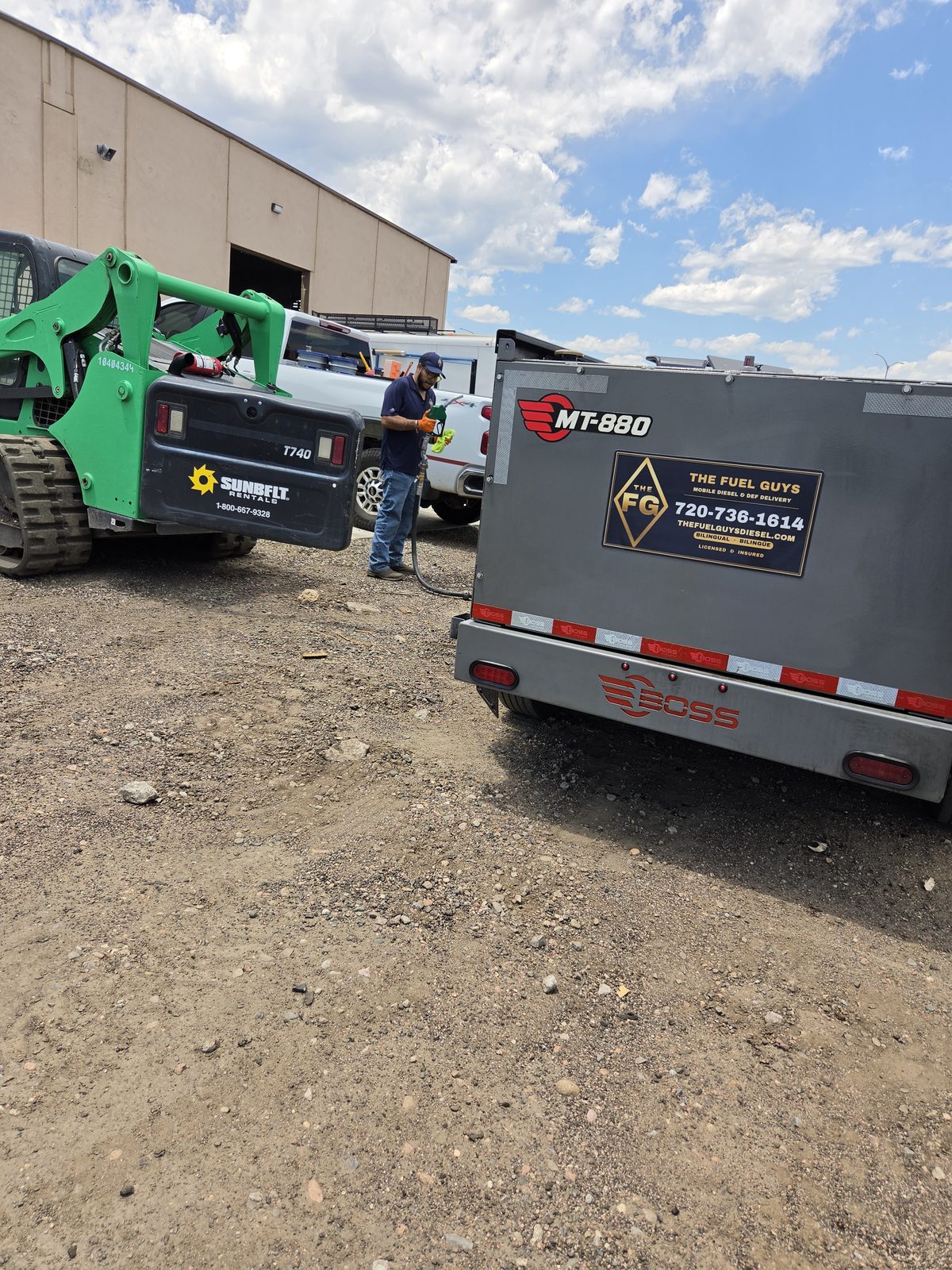
What you should not do is guess. A machine that runs dry idles a crew, pushes a concrete pour, and stacks up every trade behind it. We deliver diesel and DEF across the Denver metro and Front Range, and you can set up a recurring delivery so nobody on your site has to think about gallons per hour again.