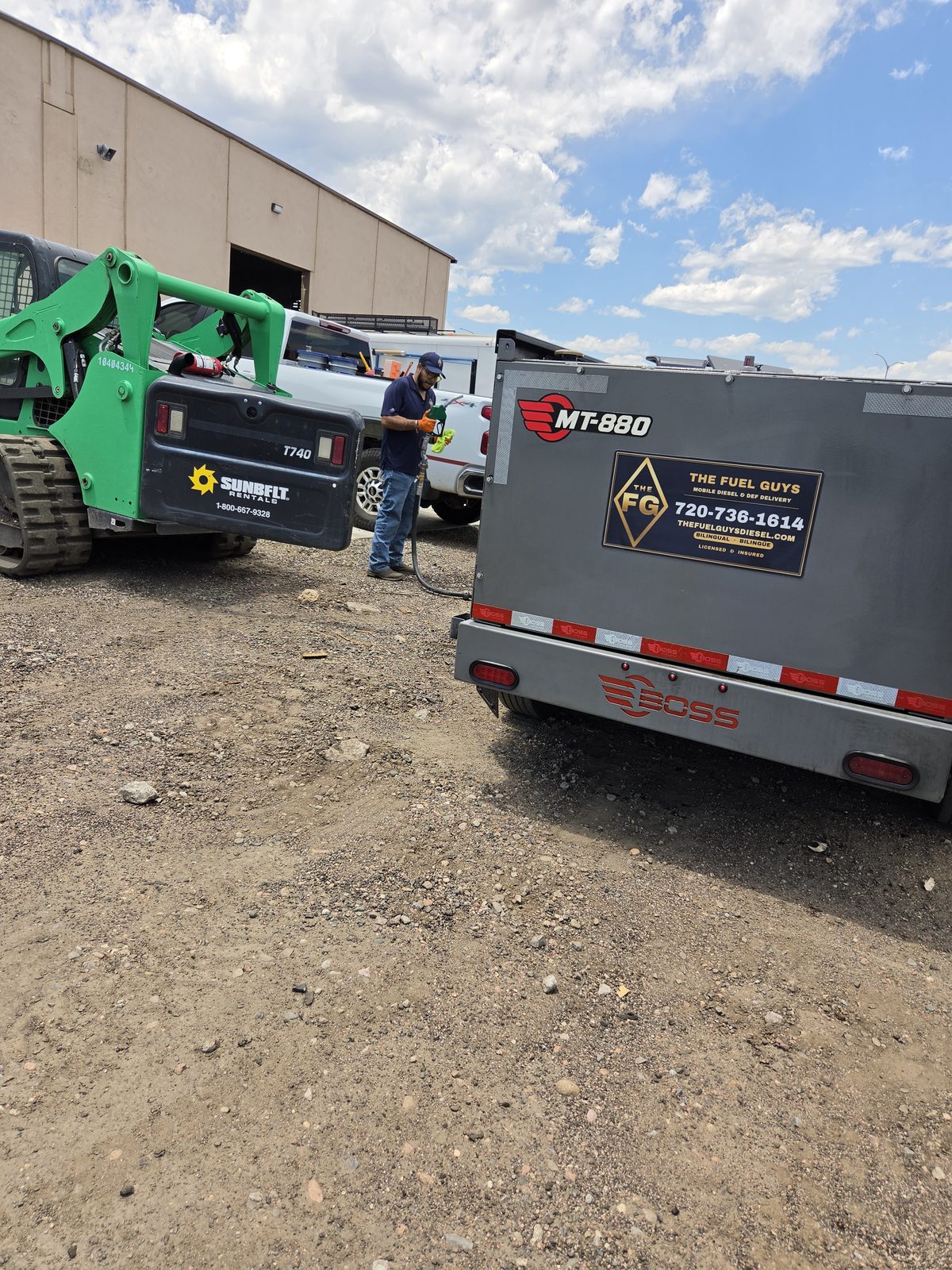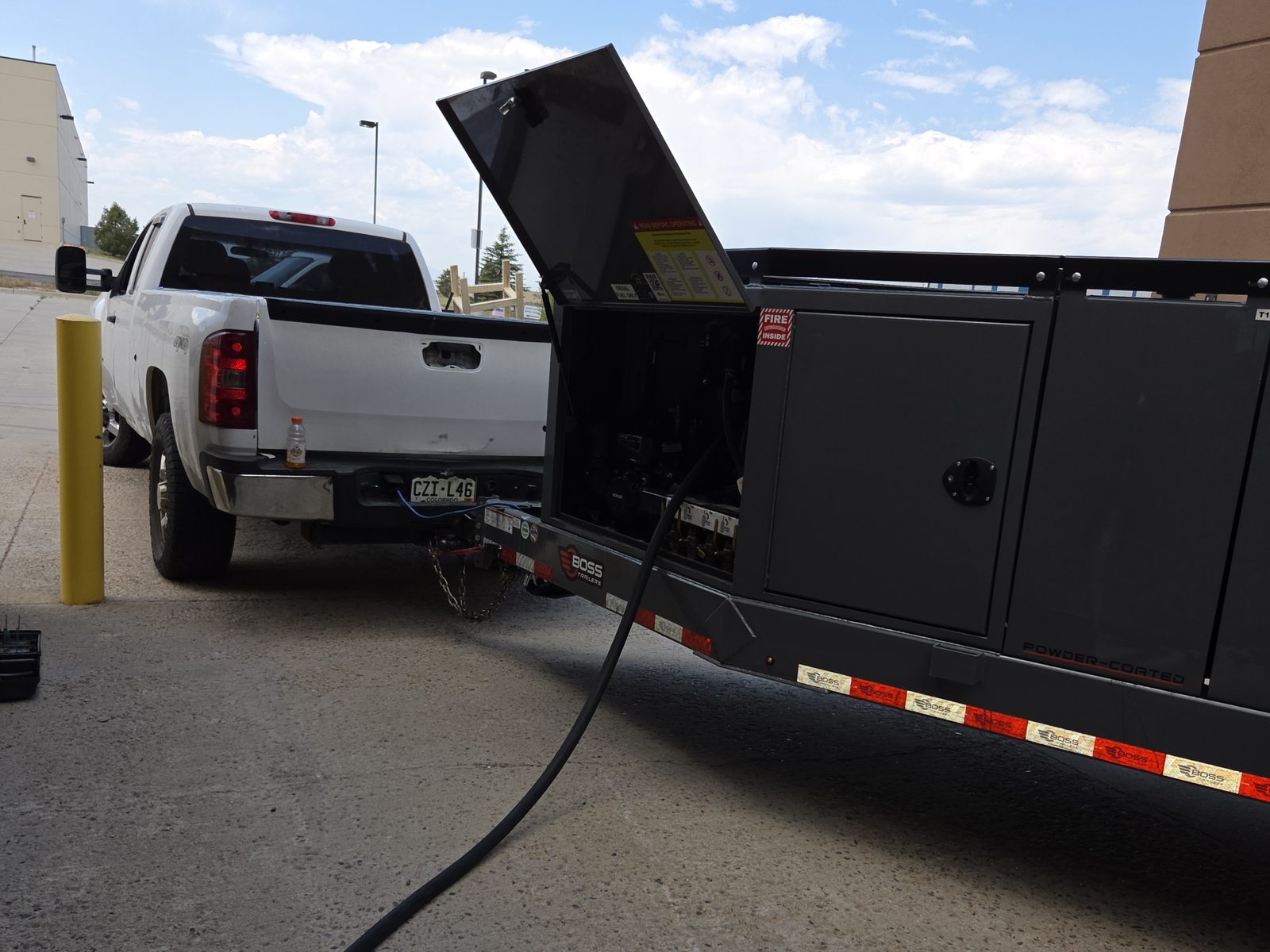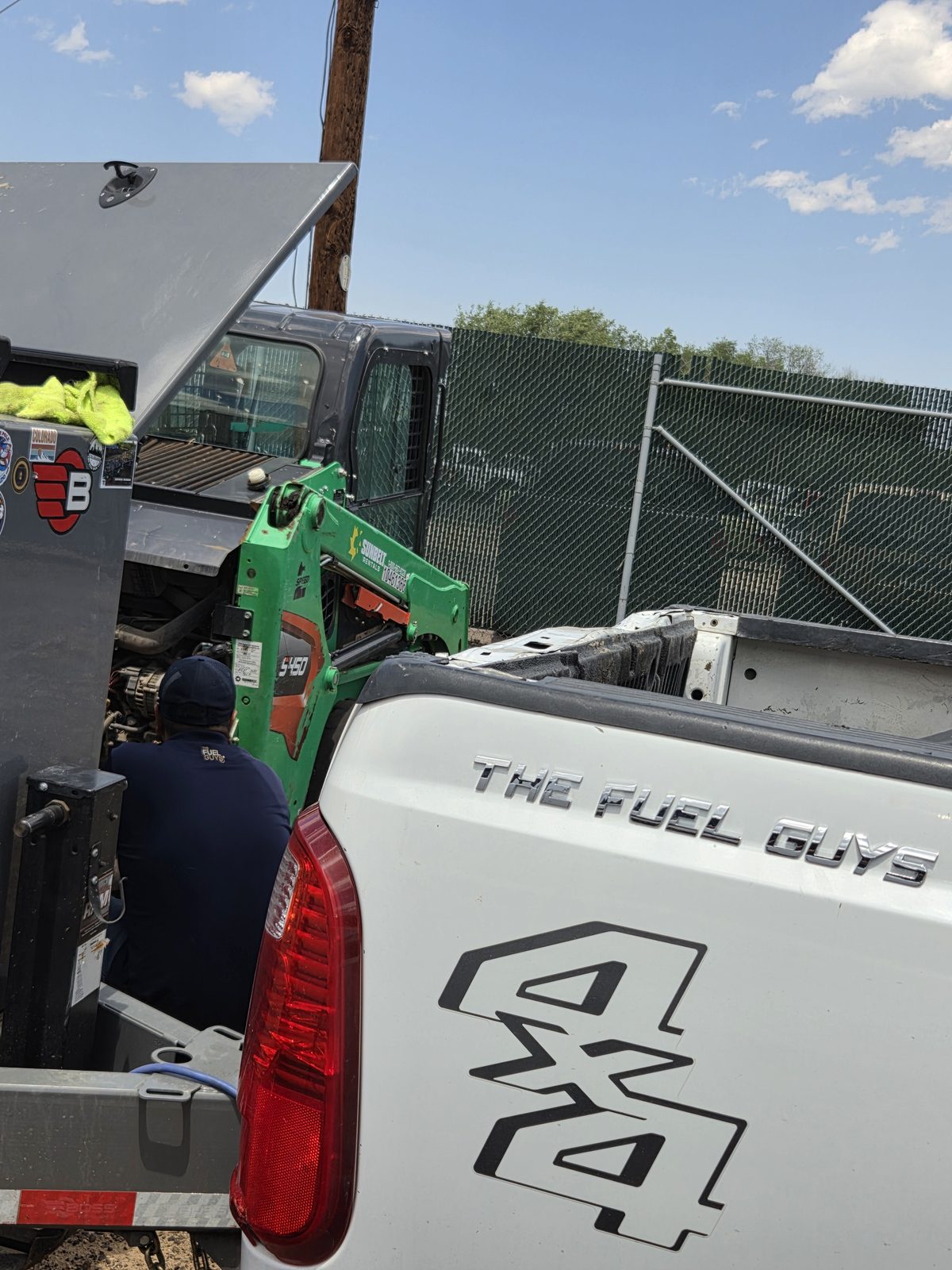
Every August I get the same call. A machine throws a DEF quality fault, the operator swears the tank was topped off last week, and somebody wants to know what was wrong with the fuel. Usually nothing was wrong with the fuel. The problem is the blue jug that spent three weeks in the back of a truck.
Diesel exhaust fluid is not a chemical that sits still. It has a shelf life, and that shelf life is measured in storage temperature, not in months on a calendar. In Denver, from June through September, most of the DEF on a job site is stored well outside the range that shelf life assumes.
What actually happens to DEF when it gets hot?
DEF is 32.5% high-purity urea and 67.5% deionized water. That is not a marketing number. ISO 22241-1, the standard every certified supplier meets, holds urea content to a range of 31.8% to 33.2% by mass. Step outside that band and the fluid is no longer DEF by specification.
Heat is what pushes it outside. Urea in water slowly reacts to form ammonia and carbon dioxide, and the reaction speeds up as temperature rises. The urea fraction drops. Push the temperature high enough — above roughly 70 °C (158 °F) — and biuret starts forming at a significant rate on top of that.
Two things matter about this for anyone running equipment. First, it is a slow reaction, so a hot afternoon does nothing. It is sustained heat over weeks that moves the number. Second, it is invisible. Nothing precipitates, nothing turns brown. Weak DEF looks exactly like good DEF.
How long does DEF last at Denver summer temperatures?
The American Petroleum Institute publishes the shelf-life table straight out of ISO 22241, and it is the only version of this worth quoting. Shelf life is stated against constant storage temperature:
| Constant storage temperature | Minimum shelf life |
|---|---|
| ≤ 50 °F (10 °C) | 36 months |
| ≤ 77 °F (25 °C) | 18 months |
| ≤ 86 °F (30 °C) | 12 months |
| ≤ 95 °F (35 °C) | 6 months |
| > 95 °F (35 °C) | Test before use |
Source: American Petroleum Institute, Storage and Handling of Diesel Exhaust Fluid (2024), per ISO 22241. Last reviewed August 2026.
Read the left column again. The "one year" figure everybody quotes is the 86 °F row. It is not a promise about the product. It is a promise about the warehouse.
Product data sheets say the same thing in plainer language. Irving Oil's API-certified DEF sheet states that to prevent decomposition, prolonged transportation or storage above 30 °C (86 °F) should be avoided, and that the fluid should never be stored in direct sunlight. Rolls-Royce's mtu service literature is more conservative still and puts the line at 25 °C (77 °F).
Is your DEF actually sitting at 86 degrees?
This is the part that gets skipped. Denver's normal July high at DIA is 89.9 °F. That is the normal, in open air, in the shade, at a weather station. It is already above the 12-month line before anything is enclosed.
Now put the jug somewhere real. A peer-reviewed study of enclosed vehicles measured an average interior rise of 41 °F above ambient within 60 minutes, with 80% of that rise happening in the first 30 minutes, across ambient temperatures from 72 to 96 °F. Apply that to a 90-degree Denver afternoon and the inside of a closed truck cab or a steel job box is somewhere around 130 °F.
A 2.5-gallon jug in that box is not on the 12-month row. It is not on the 6-month row either. It is in the "test before use" category, and it got there by 11 a.m.
The same logic applies to a poly tote parked on the sunny side of the trailer, a drum sitting on hot asphalt, and the DEF tank on a machine that idles all day in direct sun. None of those are 86-degree storage.
What does degraded DEF actually cost you?
Modern SCR systems check the fluid. Under 40 CFR 1036.111, DEF that fails the manufacturer's concentration specification is one of the conditions that triggers an inducement on a highway engine. The derate schedule in that section steps vehicle speed down toward a 25 mph cap, decreasing by 1 mph for every five minutes of engine operation.
On a highway truck that is a load that does not deliver. On a piece of equipment it is a machine standing still with a crew standing around it. Either way the number that matters is not the price of the DEF — it is the day.
One thing worth knowing, because it is moving: on July 14, 2026 the EPA published a proposed rule that would replace SCR performance derates with visible and audible notifications instead. Comments close August 29, 2026. It is a proposal, not law, and nothing about how your current fleet behaves has changed. Do not plan around it.
Can you tell bad DEF by looking at it?
No. Cloudy DEF or visible particles tell you something got into the container, and that fluid should go. But heat degradation is a concentration problem, and concentration is not a color. Clear, clean-looking fluid can sit below 31.8% urea.
There are two honest checks:
- The date code on the container. Every reputable manufacturer stamps a production date. Match it against the table above using the temperature the container actually lived at, not the temperature of the store you bought it from.
- A refractometer. Refractive index correlates directly with urea concentration, and ISO 22241 specifies the measurement at 20 °C. A handheld DEF refractometer is inexpensive, reads in seconds, and tells you the one number that matters. Every fleet running SCR equipment should own one.
A refractometer will not catch contamination — dirt, tap water, diesel in the DEF jug. It catches concentration. That is the failure mode heat causes.
How should you store DEF on a Denver job site in August?
- Shade beats everything. Direct sunlight is called out by name in both the API guidance and manufacturer data sheets. A tarp, the north side of a conex, or the inside of a trailer with the doors cracked all beat the open deck.
- Buy for weeks, not for the season. Bulk pricing on DEF you will not use for four months is not a savings if it degrades. Smaller, more frequent deliveries keep the fluid young.
- First in, first out. Date the containers with a paint pen when they arrive. Crews grab the closest jug, not the oldest one, unless the oldest one is the one in front.
- HDPE or stainless only. DEF reacts with copper and brass. Dedicated equipment, never a repurposed drum.
- Never top off with tap water. DEF is deionized water for a reason. Adding tap water introduces minerals the SCR catalyst cannot handle.
- Do not store it in the cab. The cab is the hottest storage on the site.
If you would rather not manage any of this, that is most of why we deliver DEF alongside diesel on our regular routes. Fluid that gets used inside a few weeks never has time to drift. You can see what we run on the services page, or check whether we cover your site on the service area map.
Does freezing hurt DEF?
Worth answering here because it is the question everybody in Colorado asks instead, and the answer is the reverse of what people expect.
DEF freezes at 12 °F (-11 °C). The 32.5% concentration was chosen precisely because it is the eutectic point for urea and water — the mixture with the lowest possible freeze point — and because urea and water freeze and thaw together at that ratio, the fluid comes back to spec when it warms. Equipment DEF tanks are designed with heaters for exactly this.
Winter is not what ruins DEF in Colorado. August is. If you are going to worry about one season, worry about the one you are standing in.
Running low on a Friday afternoon or staring at a derate on a machine you need Monday? That is what our emergency service is for.