The call always sounds the same. A superintendent walks the site at 6:30 on a Monday, the 500-gallon cube reads a third lower than Friday, and nothing explains it. No broken lock. No tire tracks. Just gallons that are gone.
Fuel theft is the loss almost nobody puts on a report. Too small to feel like a crime scene, too routine to escalate, so it gets absorbed into the fuel line item and forgotten. That is exactly why it repeats.
How common is job-site fuel theft in Denver, really?
Nobody has a clean number, and you should be suspicious of anyone who hands you one. When CBS Colorado reported on a run of Denver-metro fuel thefts in June 2026, the Denver Police Department said it had logged four fuel-theft cases in 2026 — while also saying it does not track stolen fuel as its own category. Englewood police documented two cases in early May. Officers told the station that victims often do not report at all, because there is rarely evidence to work with.
Treat those figures as a floor, not a measurement. Most of the eye-catching percentages circulating online trace back to security-vendor marketing rather than police or insurer data. You manage this from your own fuel log.
What is documented is the method. Thieves either siphoned the tanks or drilled straight through them, and CBS Colorado reported repairs of roughly $1,000 to $2,500 depending on damage. On a job site, a drilled tank is also a spill and a fire hazard sitting in your laydown yard.
What is the stolen diesel actually worth — legally?
Colorado grades theft by the value of what was taken, under C.R.S. 18-4-401(2). The table below uses the EIA's Rocky Mountain on-highway diesel price of $5.285 per gallon for the week ending August 3, 2026, purely as a reference — dyed off-road fuel prices lower, and a prosecutor uses the value actually proven.
| Gallons taken | Value at $5.285/gal | Colorado offense class |
|---|---|---|
| 55 gal (one drum) | $290.68 | Petty offense (under $300) |
| 100 gal | $528.50 | Class 2 misdemeanor |
| 200 gal | $1,057.00 | Class 1 misdemeanor |
| 400 gal | $2,114.00 | Class 6 felony |
| 1,000 gal | $5,285.00 | Class 5 felony |
Price reference last reviewed August 2026.
Here is the part most contractors do not know. Under C.R.S. 18-4-401(4)(a), when a person commits theft twice or more within a period of six months, two or more of those thefts may be aggregated and charged in a single count. Subsection (4)(b) allows the same for repeated thefts against one victim under a single scheme or course of conduct.
Read that with a fuel log in your hand. Forty gallons skimmed on a Thursday night is a petty offense and no detective is coming. The same forty gallons, documented eleven times across two months, is 440 gallons in one count — a felony. That is why the log outranks the camera.
What does Colorado expect a fuel tank to look like?
Colorado's storage tank rules live in 7 CCR 1101-14, administered by the Division of Oil and Public Safety. Read the scope first: the AST program covers tanks between 660 and 39,999 gallons, so most job-site cubes — 250, 500, 550 gallons — sit below it. The rules still matter. They are the clearest written statement of what this state considers adequate tank security, and they are what your fire inspector and your carrier will reach for:
- Rule 3-2-1(g)(2) — tanks not enclosed in vaults are to be enclosed with a chain link fence at least 6 feet high, separated from the tank by at least 10 feet, with a gate secured against unauthorized entry.
- Rule 3-2-1(g)(3) — tanks unsupervised for any period of time, or in isolated or remote areas, are to be secured and marked to identify the fire hazards. Where necessary to protect the tank from tampering or trespassing, the area is to be secured.
- Rule 3-2-1(e) — tank outlets are to have a device, such as a normally closed solenoid valve, that prevents gravity flow from the tank to the dispenser.
"Unsupervised for any period of time" describes every job site in the metro between 5 p.m. and 6 a.m. Permit thresholds are separate and vary by fire district — those are covered in do you need a permit to store diesel on a Denver job site. Confirm both with your local authority having jurisdiction before you set a tank.
Which controls actually work, in order of payback?
| Control | What it stops | Effort |
|---|---|---|
| Keep no bulk tank — fuel the machines directly | Everything. No tank to drill, nothing sitting there overnight. | A scheduling change |
| Meter every gallon in and out; reconcile to hour meters weekly | Slow skimming and internal loss — and it builds the aggregation record | 15 minutes a week |
| Locking fill cap plus an anti-siphon or tank-level device | The opportunist with a hose. Not a drill. | Low, one-time |
| Fence and secured gate per Rule 3-2-1(g)(2) | Walk-up access; also your code posture | Moderate |
| Camera with a named person assigned to review it | Nothing by itself. It produces evidence, not deterrence. | Moderate, ongoing |
| Dyed off-road fuel in site tanks | Tempting anyone to move site fuel into a personal truck | None — it is usually already dyed |
That last row is worth a sentence. Dyed diesel is legal in off-road equipment and illegal on the highway, and the federal penalty under 26 U.S.C. § 6715 is the greater of $1,000 or $10 per gallon involved, escalating with prior penalties. Ten gallons of site fuel in someone's pickup is a $1,000 exposure, not a $53 one. Say that at a toolbox talk once. The dyed fuel rules are on our red dye diesel page.
How do you tell theft from ordinary shrink?
Your fuel log lies to you for boring reasons before it lies to you for criminal ones: extended idling, cold starts, a machine that went to another job, an operator topping off a company truck without writing it down, a drifted meter. Rule those out first. Accusing a crew of theft when the answer was idle time is a mistake you only get to make once.
Timing separates the two. Ordinary variance spreads evenly across the week and scales with production. Theft clusters: Friday night to Monday morning, holidays, the week the site sat idle. It comes in round numbers, and it stops the moment the tank moves.
What should you do the morning you find fuel missing?
- Photograph the tank, the cap, the ground under it, and the meter reading before anyone touches anything.
- Check the shell and the ground for drilling or a leak, and treat pooled fuel as a spill.
- Write the loss into the fuel log: date, gallon figure, last known good reading. That entry is what a six-month aggregation is built from.
- File a police report even when the amount is small. It is the only way incident two ever connects to incident one.
- Ask your agent one question: is fuel covered under this builder's risk policy, and what is the deductible?
- Change one thing — move the tank into the light, cut the on-site volume, or switch to direct fueling. Repeating the same setup and hoping is not a control.
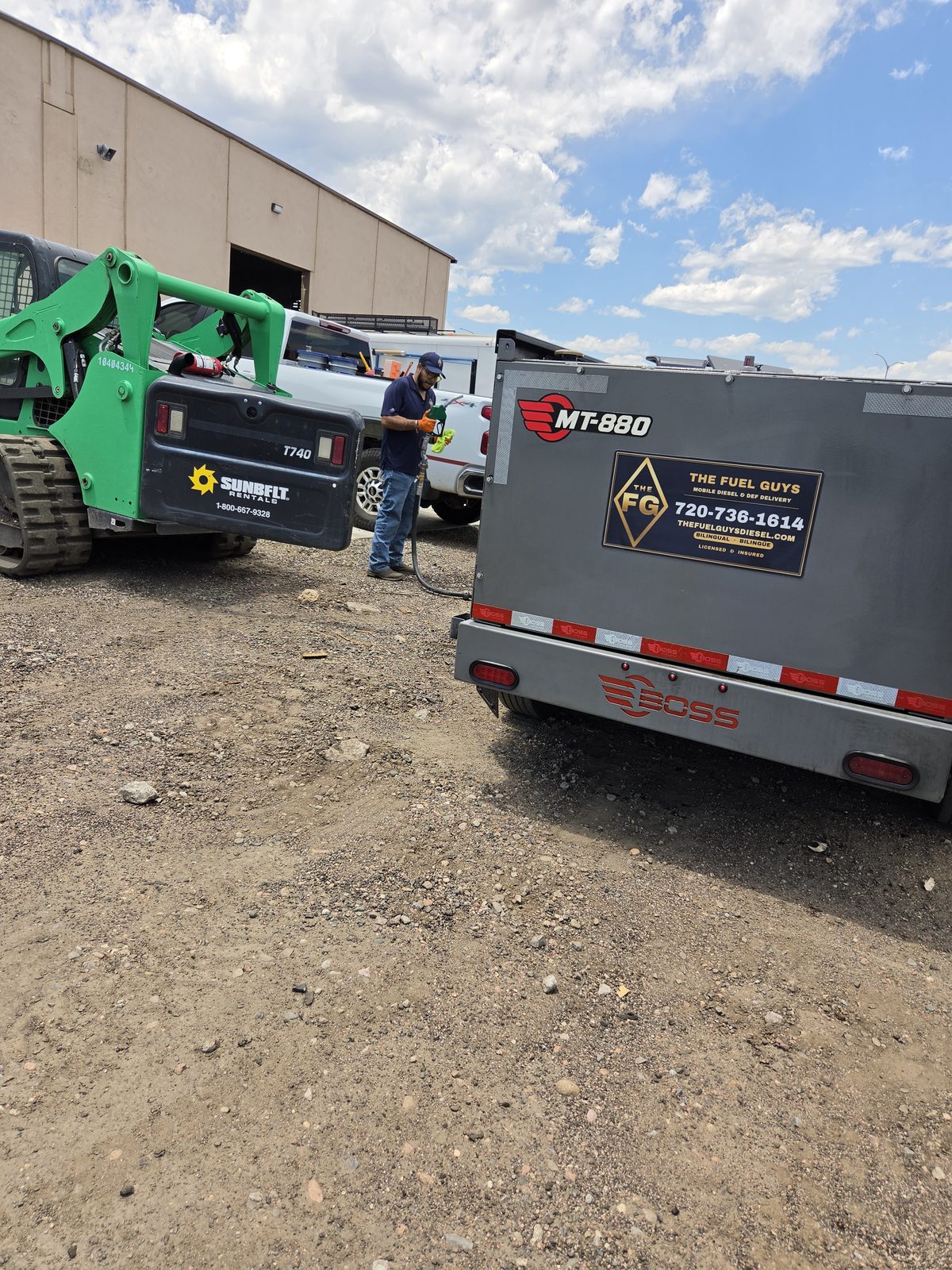
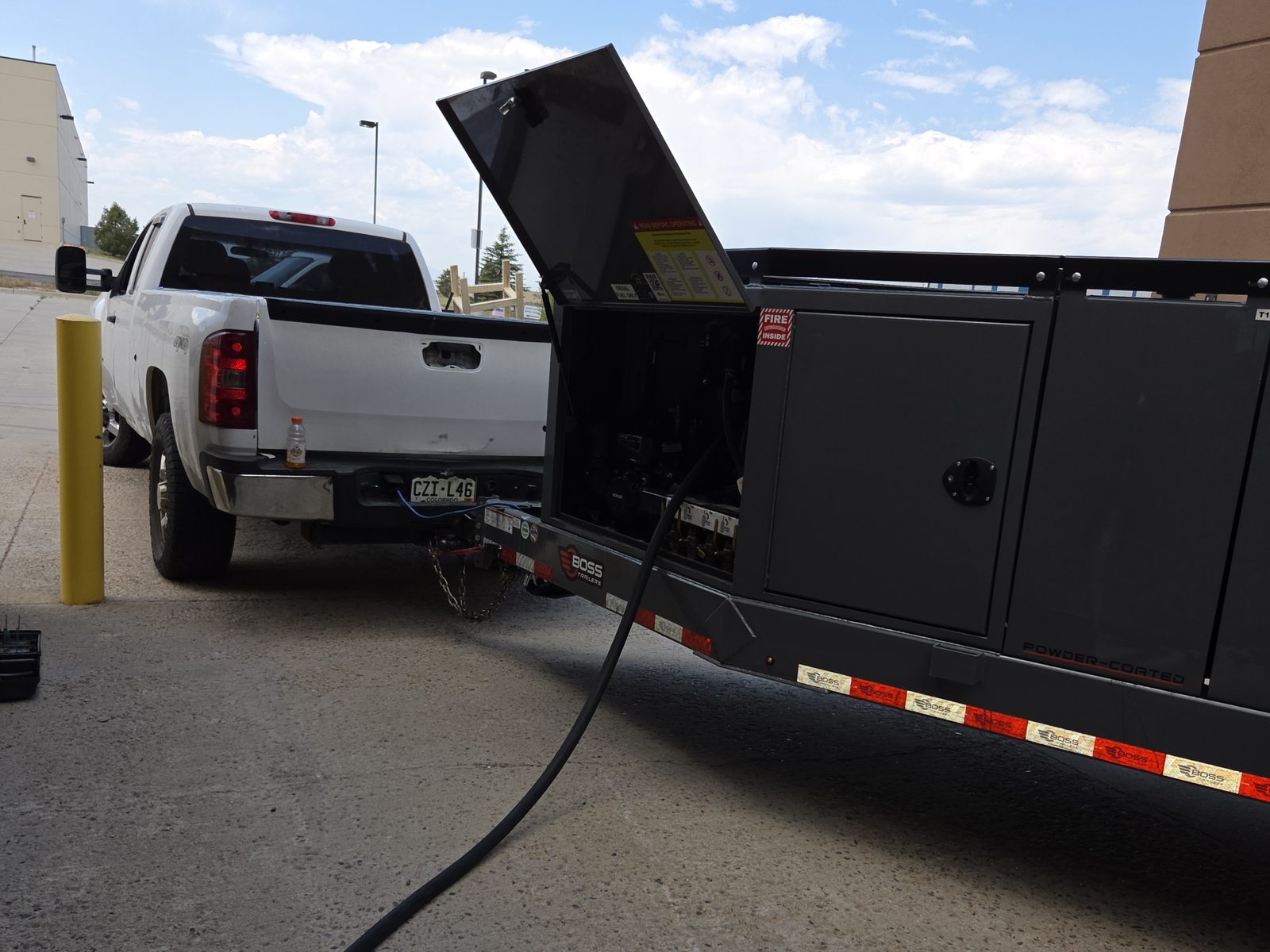
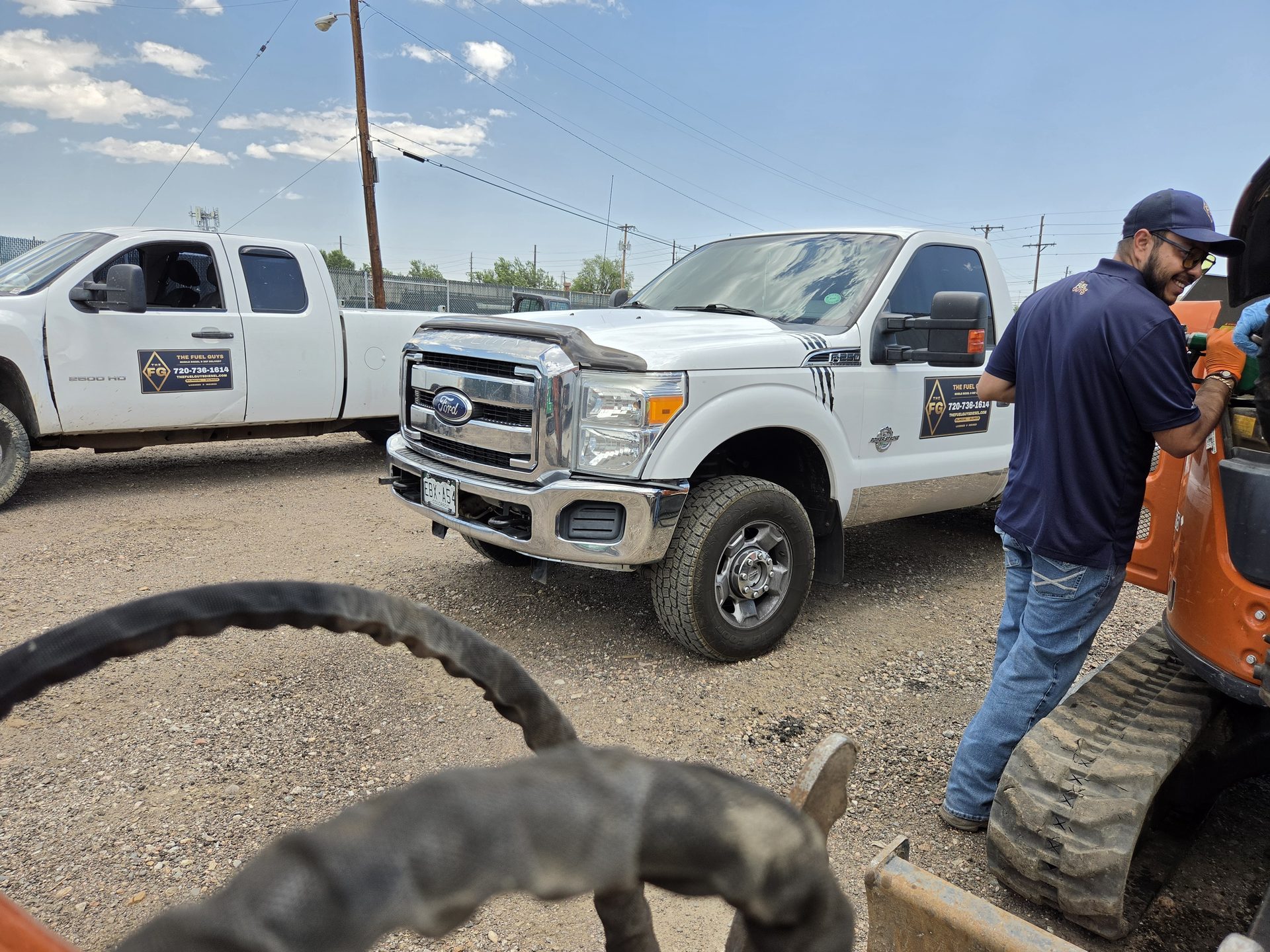
The clean version of all of this is to stop storing fuel you are not burning that week. Delivery straight to the equipment removes the tank, the fence, the permit conversation, and the theft target in one move — the economics are compared in wet hosing versus a job-site tank. On high burn with a long schedule a tank still wins. But if you are losing fuel and have not priced the alternative, you are paying for that tank twice.
We run fuel to job sites, fleets, and generators across the Denver metro and Front Range, including after-hours calls, and we meter every gallon. Full service list: what we deliver.